Research Projects
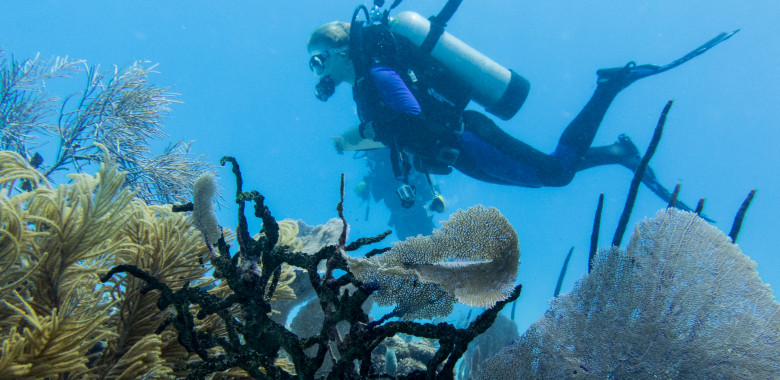
Marine paleontology, Panama Paleontology Project
The PPP has achieved international recognition as one of the most important and innovative new achievements in paleontology. The primary goal of the PPP is to document the marine biological consequences of the formation of the Isthmus of Panama, and more generally, to determine the extent to which environmental change drives major alterations in ecology and evolution. To do this we need to determine the extent and quality of the geological record, establish a rigorous time-stratigraphic framework, determine environmental changes through time, make very large collections of fossils based on a rigorous sampling plan, and curate, identify, and document the fossils in accessible databases.
What we have done
We have met most of the above goals for three Caribbean sedimentary basins: Limon, Bocas del Toro, and Canal ( Central Panama).
- The general Neogene geology and stratigraphy have been described in 5 core papers in the Geological Society of America (GSA) Bulletin, Geology and Bulletins of American Paleontology (the "Blue Book"). A major paper on the geology of Darien has also been submitted to the GSA Bulletin.
- The general paleontology has been documented for major groups in the Blue Book, a special issue of the Journal of Paleontology, and numerous articles in other journals including Science, PNAS and Paleobiology. The extensive PPP biodiversity data raise important questions about the value of global paleontological biodiversity databases that are derived only from published papers, without original work. We also published a synthetic book in 1996.
- Construction of major databases of PPP and related project results are made available to the public as soon as possible.
Archeology
Dr. Richard Cooke
Research Interests: Archaeology of New World tropics; long-term history of Native American peoples of Panama and neighboring areas; archaeozoology (especially fishing in the eastern tropical Pacific); archaeology and education in Latin America .
Current Research: Has conducted field research in Panama since 1969, concentrating on the “Gran Cocle” culture area. His laboratory houses a large vertebrate skeleton collection, which specializes in marine fish from the eastern tropical Pacific.
Since 1992 Dr. Cooke has been directing a long-term field project at Cerro Juan Diaz near the Parita Bay on the central Pacific coast. This research, which employs several Costa Rican, Colombian and Panamanian specialists, attempts to reconstruct the social organization, economy and commercial relations of this important Native American settlement occupied between about 200 BC and AD 1600.
Dr. Cooke collaborates with Dolores Piperno (STRI), Lynette Norr (University of Florida, Gainesville) and Anthony Ranere (Temple University) on a cross-disciplinary study of human adaptations to Panamanian forests and coastal habitats.
Dr. Dolores Piperno
Research Interests: include the antiquity and character of prehistoric human adaptations in the lowland tropical regions of the world, together with the biogeographical and climatological history of the tropical biome. Her theoretical orientation is heavily wedded to evolutionary and ecological approaches to reconstruction of human behavior, particularly behavioral ecology. She uses plant microfossils, including starch grains, phytoliths, and pollen to investigate research problems, which currently center on the origins and dispersals of tropical forest agriculture and the nature of the environmental changes that marked the transition from the Pleistocene to the Holocene period.
Current Research: involves studies of phytoliths, starch grains, and pollen from sites that were occupied at an early time in the humid, lowland Neotropics. They are investigating these sites in order to come to some understanding of subsistence and horticulture during the late Pleistocene and early through middle Holocene periods. Starch grains appear to be well preserved on the surfaces of ancient ground stone tools, as well as in the sediments attached to the artifacts. Pollen may also be preserved in early sites. In addition to developing protocols for isolating and directly dating starch and pollen grains from tools and sediments, they are building a modern reference collection of these microfossils. Phytolith research continues with the development of methods to identify Cucurbita and other important economic species in the archaeological record. They are also studying the microfossil records from ancient lakes and swamps, in order to build a coherent and solid data base bearing on the natural and human-induced changes in vegetation that have occurred in the lowland tropics since ca. 20,000 years ago.
Ongoing Work
Geology and Stratigraphy (coordinated by Anthony Coates)
- Geological map of Bocas del Toro (to be finish in 2004)
- Integrative stratigraphy of the Pliocene and Pleistocene sections (to be finished in 2004)
- New "Blue Book" for the Darien and all eastern Pacific basins including Ecuador, Burica Peninsula, Nicoya Peninsula, Punta Judas, Osa Peninsula , and Nicaragua (starts in 2004, will finish in 2006)
Macroevolution and Paleoecology (coordinated by Jeremy Jackson)
- Paleoseasonality and paleoproductivity based on growth patterns of cupuladriid bryozoans (Aaron O'Dea postdoc) and analyses of skeletal carbonate sediments from PPP collections (finished between 2003 and 2004)
- Macroevolution and paleoecology of cupuladriids (proposal to NSF was made in June 2003, and began in January 2004 (by Aaron O'Dea, postdoctoral student, 3-year proposal)
- Macroevolution and paleoecology of scallops (Travis Smith, SIO doctoral student, qualifying exam was in spring 2003, proposal to Petroleum Research Foundation, will finish his thesis in 2005)
- Continuing analyses of patterns of molluscan diversity with Jon Todd and Ken Johnson (will finish in 2005)
- Macroevolution and molecular evolution of gastropod Polystira (one of most abundant and diverse snail taxa; Jon Todd, ongoing grant from NERC at the Natural History Museum , will finish present grant in 2005)
- Curation of fossils (Antoine Heitz at Naturhistorisches Museum , Basel , and Jon Todd, NHM) and recent collections of mollusks (Jeremy Jackson at SIO and Helena Fortunato at STRI). Bryozoans are at NMNH (Jo Ann Sanner and Alan Cheetham), foraminifera at NMNH (Cushman Collection), fish at Universidad Francisco de Miranda, Coro, Venezuela, etc.
Life Histories, Biogeography and Evolution of Neogastropods (coordinated by Helena Fortunato)
- Taxonomy, phylogeny and biogeography of fossil and recent snails of the Strombina-group (genera Strombina, Cotonopsis and Sincola)
- Life histories of strombinids, conids, olivelids, and buccinids; their relation with species extinction and speciation
- Taxonomy and phylogeny of olivelids (fossil and recent)
- Life histories, anatomy of reproductive and digestive systems and feeding habits of several species of Caribbean and eastern pacific Strombus
- Biogeography and the role of barriers for evolution in the sea
- Recent molluscan biodiversity of tropical Central America (bottom sampling survey)
- Neogene Marine Biota of Tropical America (NMITA), collaborative research with Ann Budd, University of Iowa , on uses and development of online biotic research databases (http://porites.geology.uiowa.edu)
Staff Scientists
- Anthony Coates
- Richard Cooke
- Jeremy Jackson
- Dolores Piperno